

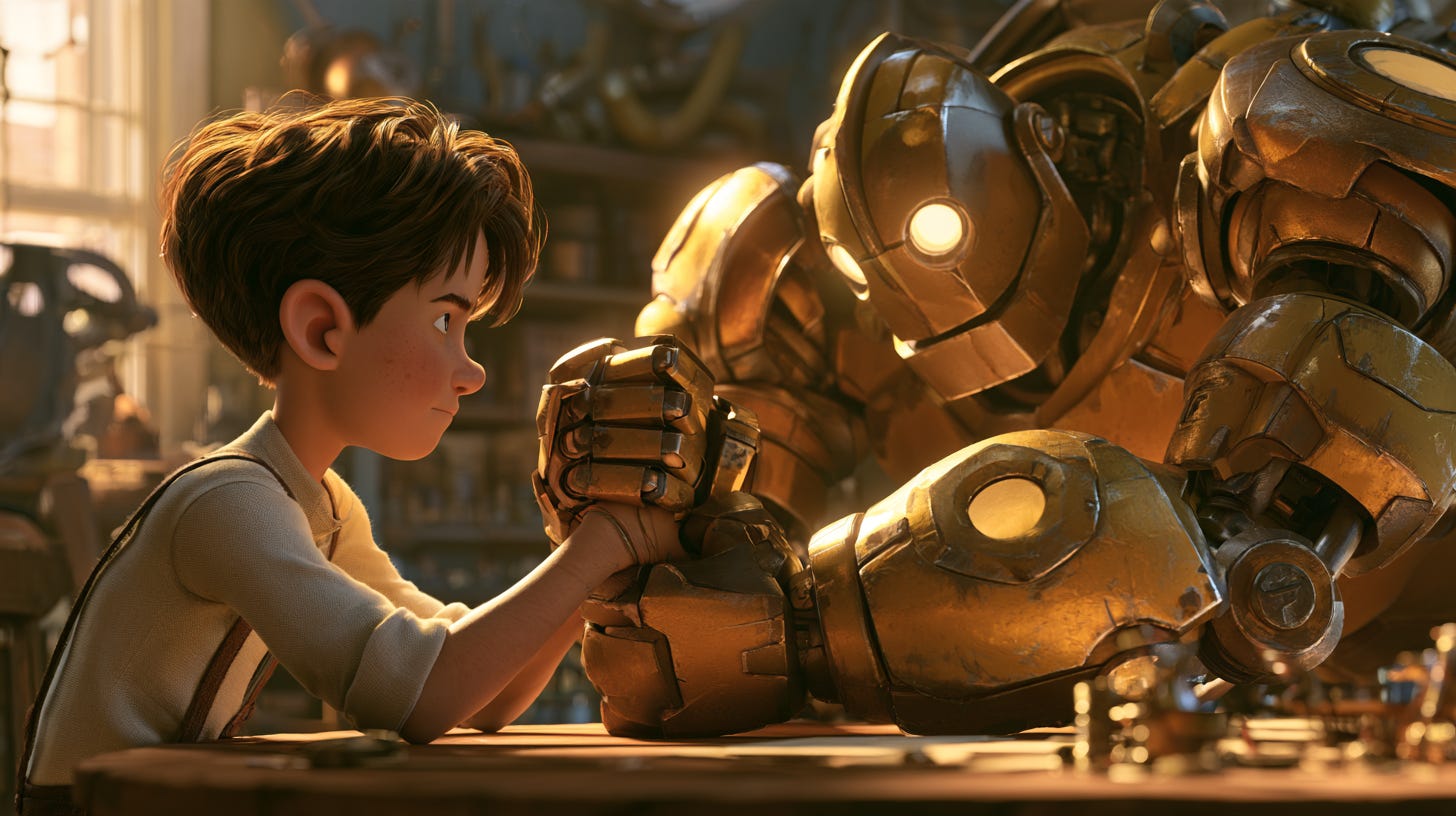
When I worked in tech in the ‘80s, there was a saying: nobody ever got fired for choosing IBM.
Back then, every desk had a terminal wired to a “Big Iron” mainframe humming in an air-conditioned room down the hall. No graphical interface, just a blinking green cursor waiting for cryptic commands. IBM owned that world. They were usually the most expensive option, the slowest to implement, and thinner on features than the newcomers. The Fortune 500 picked them anyway.
Why? Because IBM would throw enough people and brute force at any installation that things eventually worked. Even when a project went sideways, IBM was the defensible choice. So nobody got fired.
Until they did.
Microsoft, Apple, Dell and Cisco replaced the terminal-on-every-desk with networked personal computers running friendly, useful software at a fraction of the price. Within a few years, the executive who proposed betting the company on a mainframe was the one being laughed out of the boardroom.
Corporations are risk-averse, and so are most of us. We stick with what worked in the past, and we assume it will keep working.
Technology keeps proving that assumption wrong. It has already erased whole categories of work: the rooms full of human “calculators” who did arithmetic for banks, typists, keypunch operators, travel agents, much of the factory floor. With AI, the list is about to include almost every job you can name.
And yet schools still charge enormous sums to prepare kids for exactly those jobs. And parents still keep their kids in them. It’s an assembly line where the products roll off the end of the conveyor belt into the void.
Broken AND Irrelevant?
A parent who recently pulled her son out of a mainstream school described the system to me as broken and irrelevant.
Broken is hard to argue with. The US ranks around 32nd in the world in education (World Population Review, 2025) despite spending over $20,000 per student per year. Most teachers will tell you they spend more of the day managing behavior than teaching.
But irrelevant? Could that really be true?
Elon Musk puts it bluntly: “Anything that is digital, which is like someone at a computer doing something, AI is going to take over those jobs like lightning.” Whatever you think of his politics, his record of seeing where technology is going is hard to dispute. His net-net:
Moving pixels: high risk. Any role that lives entirely inside a screen, including software engineering, writing, data analysis and digital administration, is exposed, because software scales at a speed nothing physical can match. He calls what’s coming a “supersonic tsunami.”
Moving atoms: lower risk, for now. Plumbing, welding, farming, cooking. Building a robot that can navigate an unpredictable kitchen is far harder than improving an algorithm.
Bottom line: white-collar jobs are going away soon. Blue-collar jobs some number of years later.
What if the whole idea of a "job" is going away?
AI is taking over the noun jobs, the ones with titles: doctor, lawyer, accountant, electrician. But the people who are truly thriving right now aren’t doing it from inside a job title. They’re verbs. They’re creating, building and leading ventures that come out of their own perspective, passion and genius.
Dario Amodei, the CEO of Anthropic, says we’ll soon see a single person build a billion-dollar company with zero employees. AI is providing virtual employees that are faster, smarter, harder-working and more reliable than anyone you could hire, at a cost that is close to free. For most of what used to be called a job, that’s the new competition.
Can we imagine that our kids won’t ‘get a job’, and instead they’ll ‘create their own position’?
I believe so.
This is why I believe developing kids’ creativity and their unique genius zones is paramount to ensuring they thrive in the emerging AI reality.
Do We Want Our Kids to be People or Machines?
I know how this question sounds. Of course we want our children to be people. But that begs the question, why are schools training them to be machines?
What are machines great at? Repetitive tasks, speed, recall, math, data analysis, inside-the-box image creation, graphic design, writing, and programming.
What are people great at? Intuition, creativity, empathy, out-of-the-box thinking, leadership, fun, emotional awareness, physical development (we have bodies!), connection with nature, and building community.
So in a typical six-hour school day, how many hours go to the machine list, and how many to the people list?
If you’re seeing it the way I am, schools are training kids to compete against AI on its own playing field. That is not a fair fight.
But College is Still Required for Success. Right?
Four years of tuition, room, board and books now runs $150,000 to $500,000 or more. And according to the Burning Glass Institute, 52 percent of recent college graduates are working in jobs that don’t require a degree. That number is from 2024, before AI started hitting entry-level hiring. [Talent Disrupted, Burning Glass Institute and Strada, 2024]
If a degree no longer buys a golden ticket, and you can learn almost anything for free with AI, YouTube and Google, how much longer will families spend their life savings, or take on a mountain of debt, for a credential that leads to a job at Starbucks?
If you were a student at St. Andrews University in North Carolina in April 2025, you got the news that your school was going to close next week. Within days the campus was wrapped in yellow caution tape and the sports fields wrapped in barbed wire. Sixteen small private colleges closed in 2025. Canaries in the coal mine? [Inside Higher Ed]. In my opinion traditional colleges are at risk of becoming the equivalent of IBM Mainframes.
The Cost of Betting on the Wrong Horse
When the executive who bet against the wrong technology got fired, they can lick their wounds and find another job.
The parent who bets on the traditional path can’t walk away so easily. If it goes wrong, they’re the ones carrying the debt, housing a thirty-year-old, and watching their own retirement slide out a decade or more. They don’t just live with the result. They fund it.
So run the two scenarios honestly.
If you bet on traditional education and you’re wrong, you fund the consequences, possibly for the rest of your life.
If you bet against traditional education and you’re wrong, assuming you pivoted towards developing their human skills, your child will enter adulthood with leadership, conscious communication, entrepreneurship and project management chops, plus have their creativity and intuition intact. Any academic gap they need to close later can be quickly dealt-with in night school.
One of those downsides is survivable. The other isn’t.
It Takes Courage to Do the Right Thing
The first executives who chose something other than IBM needed courage too. Times had changed and the alternative was clearly better, but they still had to face the prevailing mindset in the room.
If your child is in a school that spends its day teaching machine skills and almost none of it teaching human skills, the obvious move is also the hard one. Especially if they are not thriving.
Step one: pull them out. A child who is getting nothing out of school isn’t standing still; the experience is working against them.
Step two: homeschool, or find the right alternative school. Create a program or find a school that treats human skills as the curriculum, not the extracurricular.
Pulling your kid out of school may sound harsh, impractical, even brutal. But how much further down the path do you want to go once you know where it leads? If you discovered a food you were feeding your child was slowly poisoning them, would you keep serving it?
If you’ve been following this Substack, you know the human skills are what our Inside-Out Education paradigm is built around: intuition and creativity through art, music, writing and intuitive training; each child’s unique genius through mentored, project-based learning; the life skills that actually matter around career, people, money and health; and the community skills of collaborating and teaming up on bigger problems.
And yes, if you’re a parent with a non-thriving kid in a traditional school and you ask me, I will question your decision to keep them there. Not only for what it does to your child’s future, and not only for what it may do to your own financial security. For what the world loses when a child’s unique, human gifts are blocked from ever reaching it.
If you want to see what Inside-Out Education looks like as a school day, come to our Open House, every Thursday at 8am Pacific / 11am Eastern.
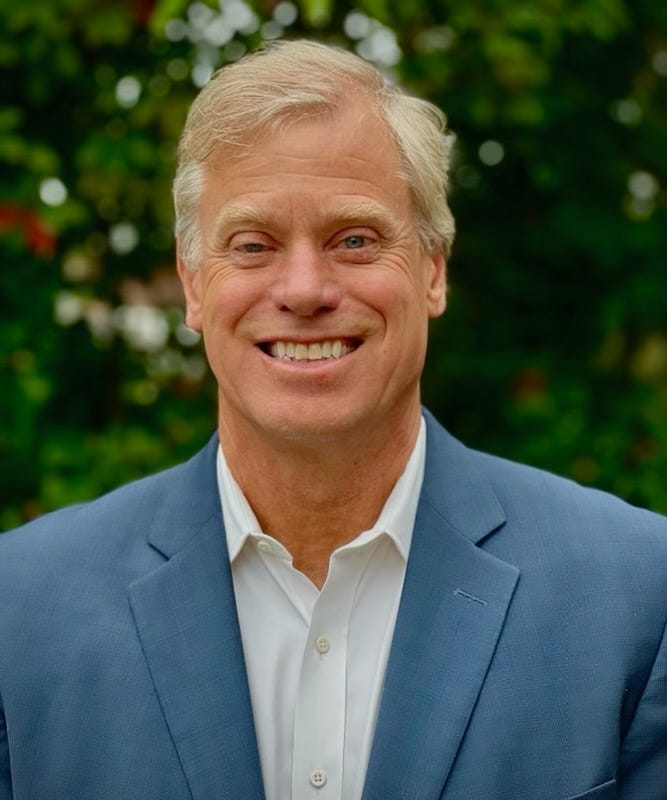
Hi, I’m Andrew Freeman, founder of Coherence Education and the Inside-Out approach to education.
I heard the call to help transform education for kids early in life, but I didn’t know how to answer it. So I spent a career in tech instead, at Microsoft, Hewlett-Packard, Netscape and a string of startups. Then Covid hit, and it became obvious that I needed to pull my eight-year-old out of second grade. I realized it was time. Since then I’ve been building the kind of school that will prepare him, and thousands of other kids, to thrive in the age of AI.
Every few weeks I publish an article introducing a piece of my upcoming book, due out in late 2026. If you’re a parent who wants something better for your child, or an educator looking for a better place to do your work, I’d love to hear from you. Together we’ll help children grow into their best human selves and help usher in the coming Harmonic Age.